


OUR PHILOSOPHY
Each project has its own personality. We approach each challenge with fresh energy and inspiration to help you achieve the best results.
Process Development
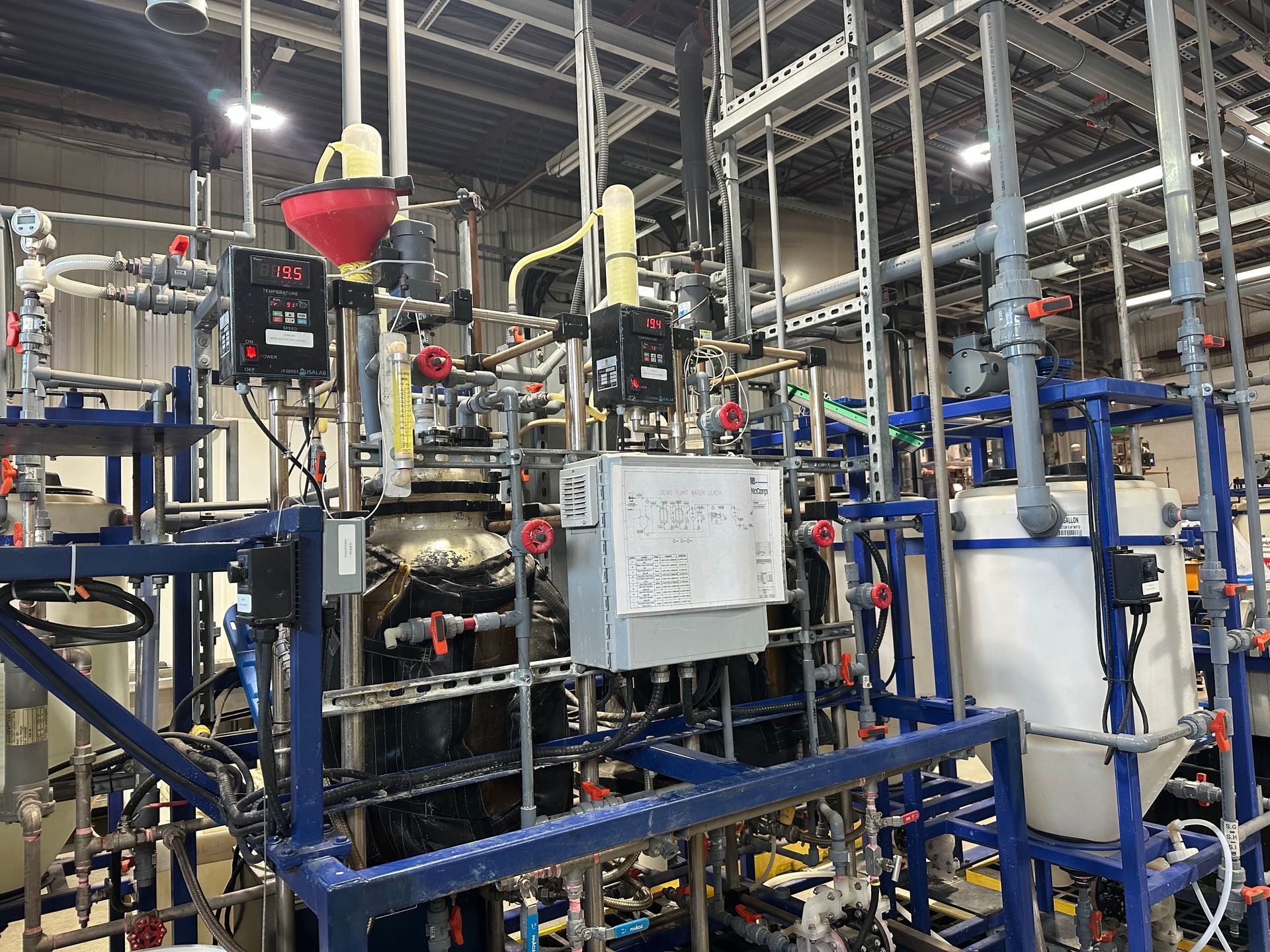
Our process development services help our clients transform innovative ideas into efficient and scalable technologies. We work closely with our partners to design, optimize, and validate processes for the extraction, purification, and recovery of critical and strategic metals.
By combining in-depth scientific expertise with concrete engineering solutions, we ensure that every process we develop is robust, cost-effective, and ready for industrial-scale application.
Bench, Pilot and Demo Scale Test Work
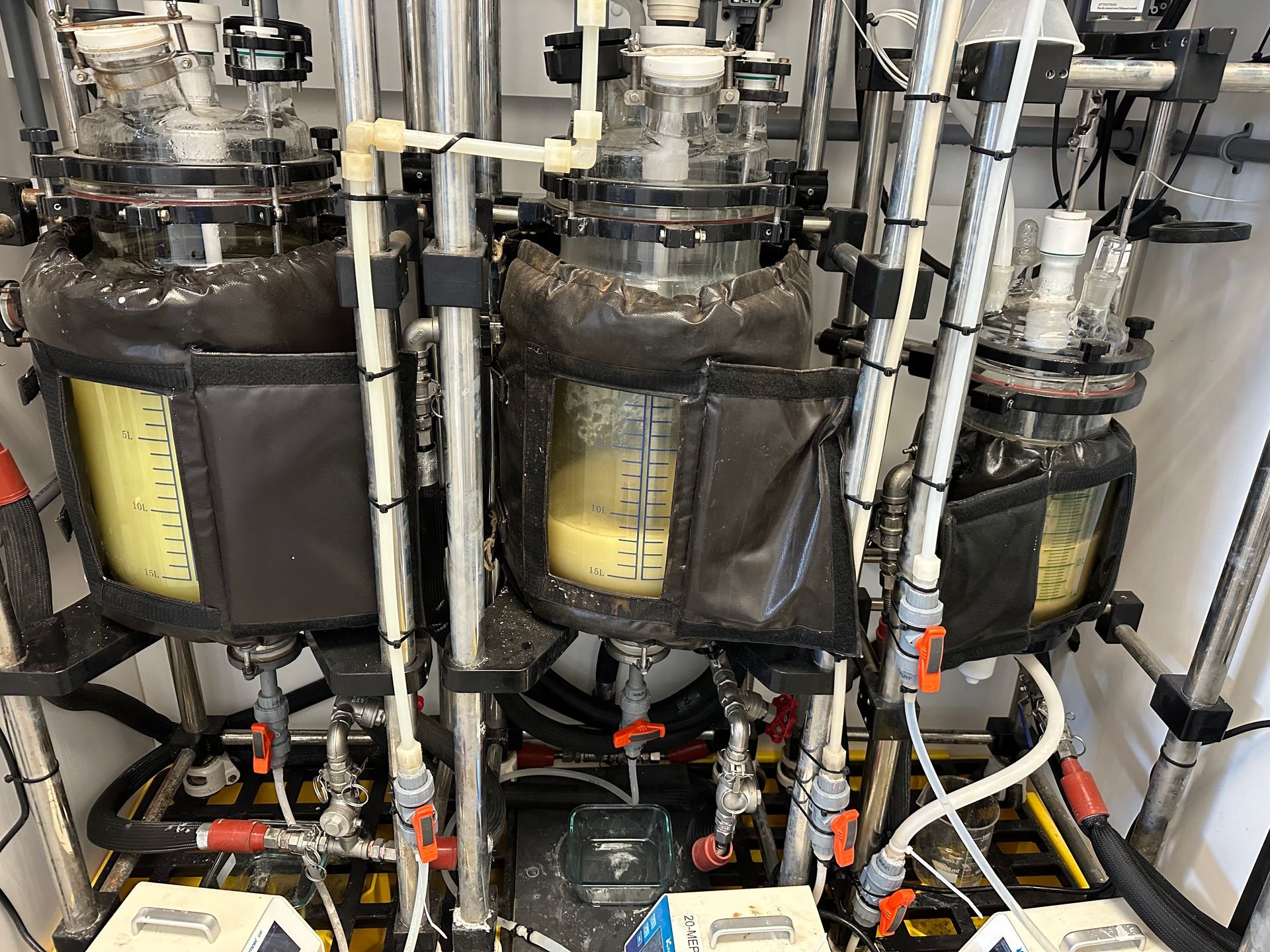
Our laboratory and pilot facilities allow clients the controlled environment and analytical capabilities required to test, refine and demonstrate integrated flowsheets.
Our clients benefit from hands-on experimentation, technical support, and accurate data to validate new technologies. The L3 facility forms a true innovation hub, enabling safe, efficient, and reliable research at every stage of development.
Equipment Design and Fabrication
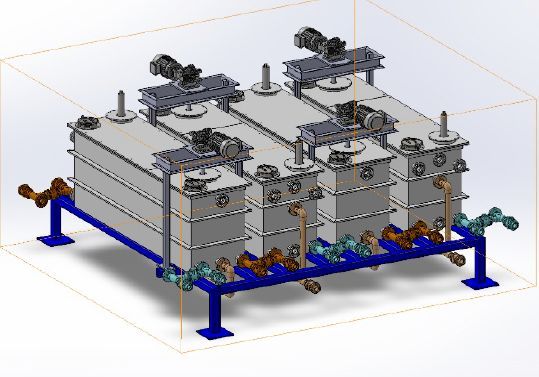
L3 designs, fabricates and operates pilot and demonstration scale equipment and process modules to support its clients process development projects both at L3's facility and at its clients facilities.
By designing, fabricating and operating pilot and demonstration modules, we support our clients validating and scaling up their technologies under realistic conditions. This approach accelerates time to market while ensuring that processes are practical, scalable, and capable of producing tangible results.
A Project at L3
The development of process flowsheets is a central element of our process development services and begins with an initial assessment, a crucial step for any project. Whether designing a completely new process flowsheet or optimizing an existing one, our team of experts works closely with clients to map out every step of material handling, chemical treatments, and separation processes.
L3 operates across the front-end loading framework and supports its clients both on the process engineering and metallurgical test works perspectives.
L3 Integrated Process Development Approach

At the core of L3's philosophy lies the integration of economics, engineering and science to maximize project velocity.
L3’s approach to process development can also be summarized in seven sequential steps using our “Scrum” process development approach:
- Literature Review and Theoretical Modeling
- Critical process assumption validation
- Core process bench-scale optimization
- Bench scale validation of ancillary process units’ assumptions
- Design, assembly, construction, and operation of small-scale pilot units.
- EPC, and operation of an integrated demonstration-scale plant
- Preparation of the commercial plant process package
On-Site Dedicated Analyses
The L3 process development approach requires a streamlined feedback process between the engineering, scientific and technical teams to ensure test work iterations can be planned, executed and analyzed efficiently.
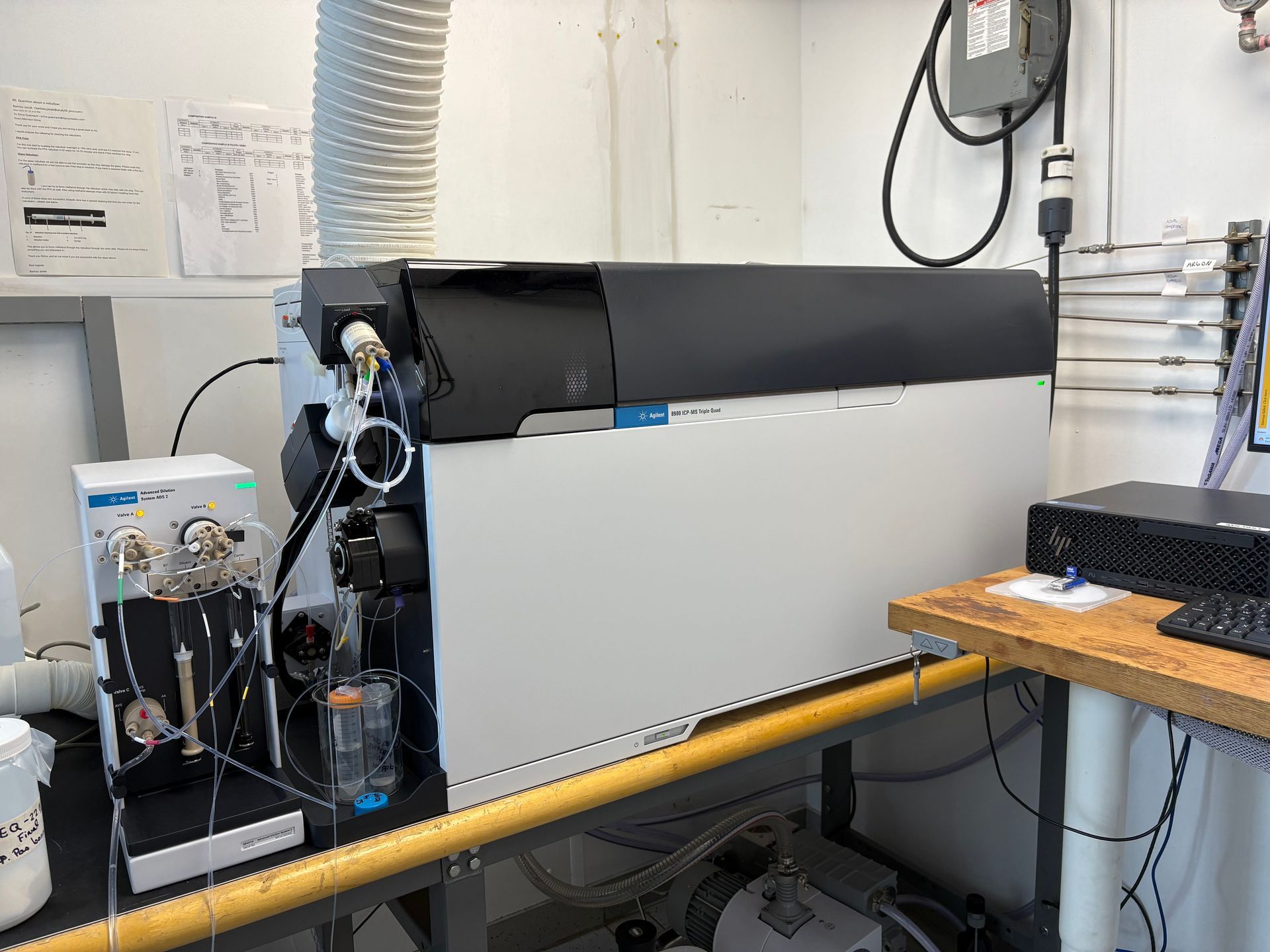
L3's analytical capabilities include advanced techniques and state-of-the-art equipment such as ICP-MS (Agilent 8900 Triple Quad), ICP-OES (Agilent 5800), and WD-XRF (Rigaku ZSX PrimusIV), enabling us to accurately measure material composition, purity, and performance under various conditions. Through rigorous testing, we help our clients understand process behavior, identify potential challenges, and confirm the effectiveness of proposed solutions.
These analyses form the basis for informed decision-making, process optimization, and successful scale-up to prototypes and industrial applications. By combining technical expertise with precise instrumentation, we ensure that each trial contributes to the development of robust, reliable, and scalable processes.
L3's analytical laboratory is dedicated to its process development projects and external requests are not considered; enabling a cycle time from process sampling and preparation by our researchers to data review and analysis by our engineers measured in hours, not weeks.
We are currently in the process of adding a XRD instrument to our facility.
Any analysis we cannot perform in-house is sent to commercial facilities such as SGS Lakefield and ACTLabs.
Flowsheet Scoping - Preliminary Economic Assessment (PEA)
Initial Flowsheet Development projects are also referred to as Preliminary Economic Assessments (PEA), Conceptual Studies or FEL-1 studies.
At L3 we approach this stage by tightly integrating three core activities: engineering design, bench-scale test work and economic analysis.
Work begins with an analysis of the resource or feedstock composition and mineralogy followed by a structured literature review, process modelling and validation of the core technical and commercial assumptions. This early phase defines the main process options, identifies critical data gaps and establishes the framework for subsequent laboratory and engineering work.
Bench-scale test programs are then designed and executed to generate the process design criteria underlying the project flowsheet and mass balance, recovery data and operating parameters required for preliminary engineering. In parallel, our engineers develop the initial process flowsheet, size major equipment and prepare high-level capital and operating cost estimates.
Continuous iteration between laboratory results, engineering design and economic evaluation allows us to rapidly refine the concept, reduce technical and commercial risk, and provide clients with a solid basis for decision-making at the PEA stage.
This integrated approach delivers both speed and flexibility while ensuring that process performance and project economics remain aligned from the outset.
Final deliverables may include a client-confidential project report or the integration of the work in a NI-43101 compliant technical report.
L3's engineers can serve as Qualified Person for Sections 13 and 17, and act in support roles for other report sections.
Typical engineering deliverables include:
- Block Flow Diagram
- Process Design Basis
- Preliminary Process Flow Diagrams
- Preliminary Mass and Energy Balance
- Preliminary Major Equipment List with sizing
- Order-of-magnitude capital cost estimate (CAPEX), exclusive of any mining related costs.
- Operating cost estimate (OPEX), exclusive of any mining related costs.
- Economic Analysis
Flowsheet Development - Pre-Feasibility Study (PFS)
Pre-Feasibility Study (PFS) level flowsheet development builds on the PEA stage and aims to provide a higher degree of technical and economic definition. At L3 we continue to apply the same integrated approach, combining engineering design, advanced test work and economic analysis in parallel.
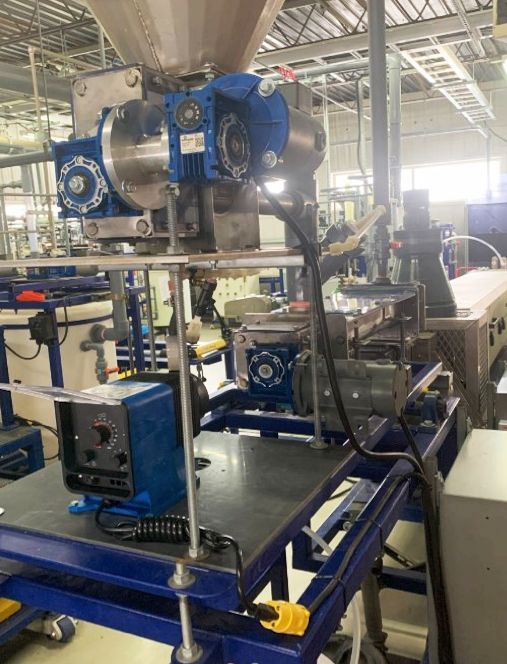
Work typically begins with a review and refinement of the PEA flowsheet, followed by more detailed process modelling, trade-off studies and targeted laboratory and small scale continuous (pilot) test programs. These programs generate the higher-confidence design criteria, mass and energy balances, and operating parameters required for PFS-level engineering.
In parallel, our engineers develop the process flow diagrams, perform equipment sizing to a higher accuracy, and prepare capital and operating cost estimates consistent with PFS standards. Process simulation is used extensively to evaluate alternative configurations, optimize energy and reagent consumption, and test the robustness of the flowsheet under varying conditions.
Continuous iteration between test results, engineering design and economic evaluation allows us to refine the process, reduce remaining technical and commercial risks, and deliver a solid basis for decision-making at the PFS stage.
This integrated approach maintains the speed and flexibility that characterize L3’s work while ensuring that process performance and project economics remain closely aligned.
Typical engineering deliverables include:
- Process Design Basis
- Process Flow Diagrams (PFDs)
- Mass and Energy Balance
- Major Equipment List with sizing
- CAPEX estimate (typically ±25–30%), exclusive of mining-related costs
- OPEX estimate, exclusive of mining-related costs
- Economic Analysis and sensitivity studies
- Process trade-off and optimisation studies
L3’s engineers serve as Qualified Person for Sections 13 and 17 of NI 43-101 technical reports and provide support for other relevant sections.
Flowsheet Validation - Feasibility Study (DFS)
Definitive or Bankable Feasibility Study (DFS / BFS) level flowsheet validation is the final stage of process development before detailed engineering and project execution. At L3 the emphasis remains firmly on process engineering, with integrated demonstration plant work serving as the primary means of validating the flowsheet and its scale-up. While piloting at the PFS stage is used to validate design assumptions, the operation of the demonstration plant during the DFS stage provides the final validation of the flowsheet, produces commercial-quality samples for customer qualification and offtake discussions, and supplies the detailed engineering data needed for confident scale-up to a commercial facility.
Throughout the program, process data, engineering observations and economic parameters are continuously reviewed and refined.
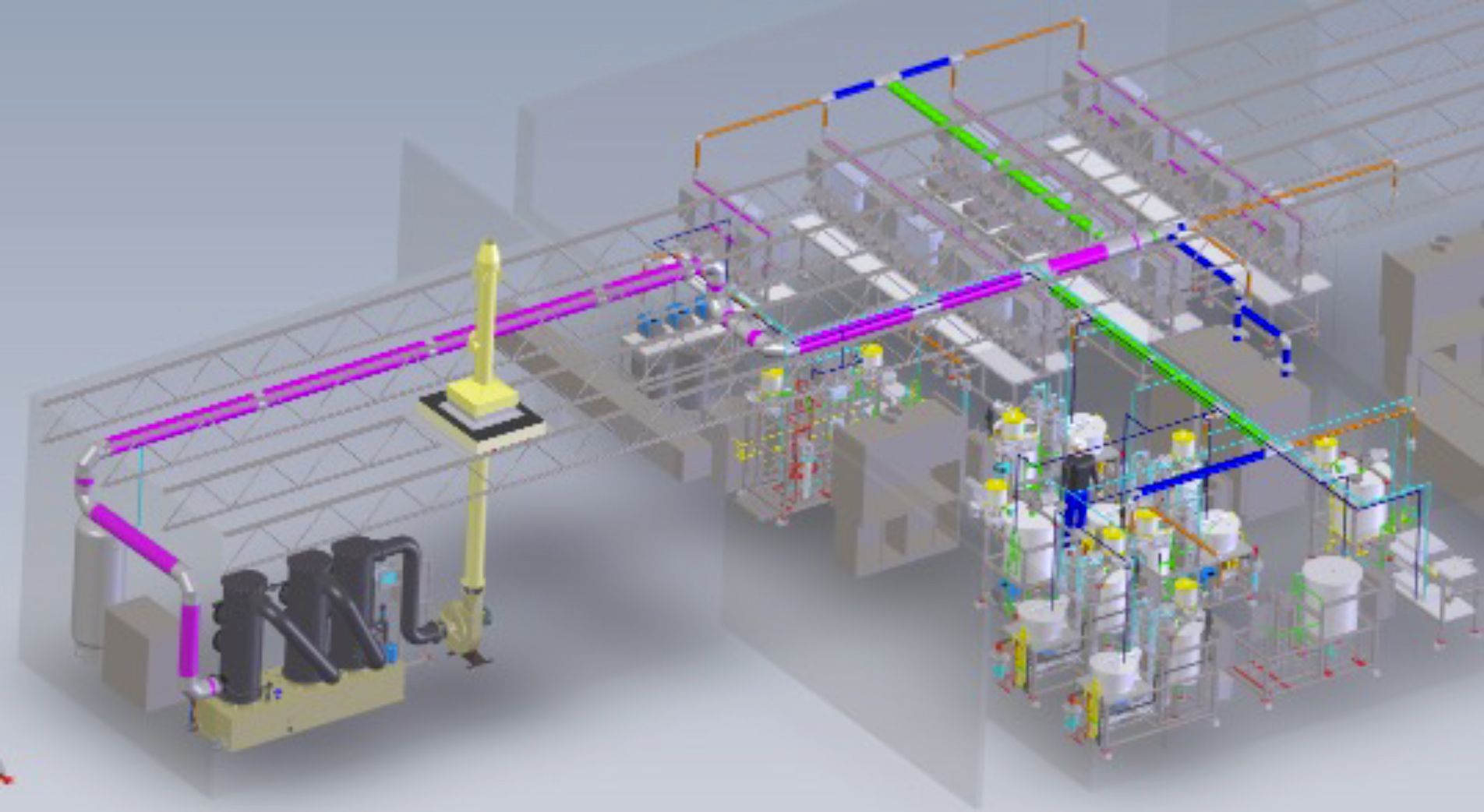
L3 designs, fabricates and operates, or supports client operation of, demonstration circuits under continuous, realistic conditions and with as many integrated recycle loops as required to confirm process performance, long-term stability, and to produce commercial samples.
In parallel with the demonstration test program, L3’s process engineers continuously refine the design criteria, mass and energy balances, and equipment sizing using the data generated from the plant. This parallel engineering work converts operating results into the final process design package required for commercial-scale engineering, while also refining capital and operating cost estimates to DFS / BFS accuracy.
This integrated approach — combining rigorous process engineering with demonstration-scale validation reduces remaining technical and commercial risk to the level required for a bankable feasibility study and final investment decision, while maintaining the speed and flexibility that characterise L3’s work.
At this level of study, L3's engineers integrate a larger engineering project team and focus on supporting the process design activities.
Typical engineering deliverables are limited to the process package and include:
- Process Design Basis and Process Design Criteria
- Detailed Process Flow Diagrams (PFD)
- Preliminary Piping and Instrumentation Diagrams (P&IDs)
- Mass and Energy Balance (DFS level)
- Control Narative
- Detailed Equipment List with sizing and selection
- Process level datasheets
L3’s engineers can serve as Qualified Person for Sections 13 and 17 of NI 43-101 technical reports and provide support for other relevant sections.
Operator Training - Detailed Engineering support
Once the Feasibility Study is complete, L3 supports clients in the transition from process validation to detailed engineering and project execution. At this stage our role shifts toward knowledge transfer, design support and operational readiness, while remaining focused on process engineering excellence.
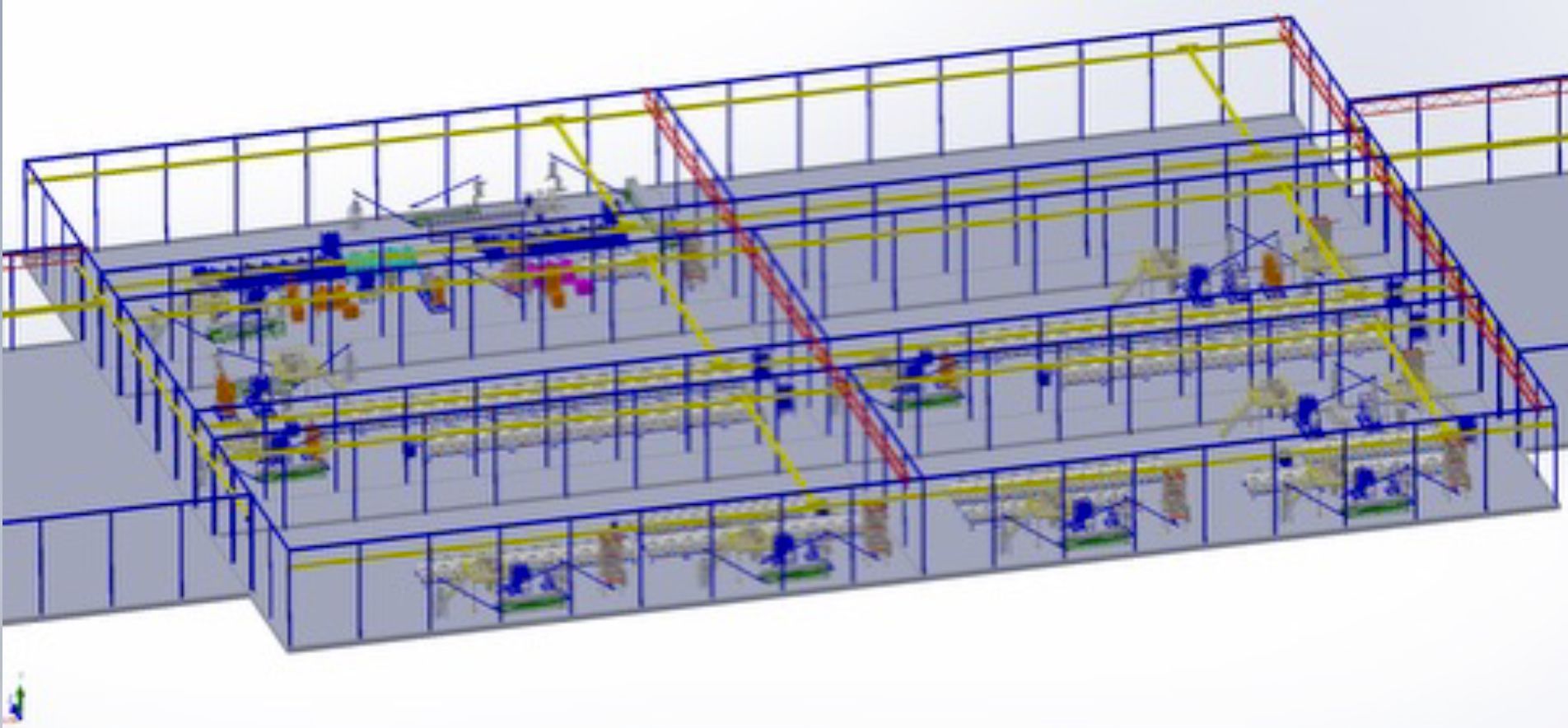
The demonstration plant becomes a key asset for operator training. By involving client operations personnel in the running of the demonstration circuits, we provide hands-on experience with the actual process, equipment behaviour, control philosophy and troubleshooting, significantly reducing the learning curve at commercial start-up.
On the engineering side, L3 can either:
- Provide specialised process engineering expertise directly to the detailed design / EPC contractor, ensuring that the design criteria, operating knowledge and lessons learned from the demonstration plant are correctly incorporated into the commercial plant design, or
- Integrate with the client’s team in an Owner’s Representative capacity, supervising the engineering contractor’s process work to protect the client’s technical interests and maintain continuity from the development phases.
In both models the objective is the same: to transfer the process knowledge generated during flowsheet development and demonstration into a robust, operable commercial design while maintaining schedule and controlling risk.
This support can be tailored in scope and intensity according to the client’s internal capabilities and the complexity of the process, preserving the speed and flexibility that characterise L3’s approach throughout the project lifecycle.
Typical support activities include:
- Operator training programs using the demonstration plant
- Process design criteria transfer packages
- Review and validation of detailed engineering deliverables (PFDs, P&IDs, equipment specifications, control narratives)
- Participation in HAZOP, design reviews and model reviews
- Owner’s Representative process engineering support
- Start-up and commissioning assistance
- Ongoing process optimisation support after start-up
Independent Technical Due Diligence
The depth of experience L3 has gained across the full process development cycle from early flowsheet scoping and bench-scale test work through pilot and demonstration programmes to detailed engineering support places us in a strong position to conduct independent technical due diligence on process projects.
Because we have designed, tested, scaled and supported the execution of complex flowsheets ourselves, we bring a practical, engineering-based perspective to due diligence reviews. We are able to assess not only the theoretical soundness of a process, but also the realism of the design criteria, the quality of the test work, the completeness of the scale-up data, and the operability of the proposed plant.
Our due diligence work typically covers:
- Review of historical and current test work programmes
- Assessment of process design criteria and mass/energy balances
- Evaluation of flowsheet robustness and technical risk
- Review of capital and operating cost estimates from a process perspective
- Identification of gaps or over-optimistic assumptions
- Practical recommendations for risk reduction or further work
Clients (investors, lenders, offtakers or project owners) engage L3 when they need a clear, independent and technically grounded opinion on the process aspects of a project before committing significant capital.